

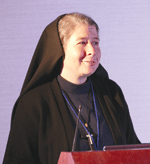
 Sr. Macht
Detroit — October is Respect Life Month for Catholics across the country, who use the month to advocate for a culture of life.
A lot of attention centers on abortion — especially in light of the congressional hearings regarding the investigation of Planned Parenthood — but another urgent issue is also quickly making its way into the consciousness of pro-life Catholics across the country.
On Oct. 5, California Gov. Jerry Brown signed a bill legalizing physician-assisted suicide, making his the fifth state to do so, following Oregon, Washington, Montana and Vermont.
For Michigan-based Catholics in the health care field, the bill and practice of assisted suicide contradicts everything health care is supposed to be about: preserving and protecting human life.
“The Church is for the protection of life from its very beginning to the end,” said Mercy Sr. Marcy Macht of the Sacred Heart Mercy Healthcare Center in Alma. “From natural law, we can’t actively take life. It’s all right to treat pain, but the problem happens when people act to relieve the pain by doing something harmful; that’s where problems begin.”
The Church’s stance against assisted suicide is predicated on the belief that all life — regardless of age, physical ability or health — is sacred and a gift from God.
David Wilson, co-founder of the Troy-based Christ Medicus Foundation, said advocacy for assisted suicide should set off alarm bells on the need for cultural reform in how life is valued.
“We need to find a system where children can care for their parents until the natural end of life,” Wilson said. “When a person reaches the final stages of life, we need to make sure they’re treated with dignity and are comfortable as they approach the end of their lives.”
Wilson acknowledges the decision on proper end-of-life care is a tough one to make, and a conversation many don’t wish to have, but one that’s crucial to address.
“At the end of the day, this is something every Catholic needs to discuss with their priest, family and doctors regarding the ethics of how they want to be cared for,” Wilson said. “We need to reject, at every turn, a health care provider that hastens the natural course of life and death; that’s immoral.”
Even though actively taking a life or hastening the end of it is immoral, Wilson said the Church doesn’t always advocate for prolonging life through extraordinary artificial means.
“Do we have a view where everything has to be done to save a person? No,” Wilson said. “Love is letting the ones we love go at the right time. But the idea of hastening natural death isn’t God’s plan.”
During the debate in California and other countries and states with legalized assisted suicide, advocates argued physician-assisted suicide preserves a person’s dignity during their final days, but Sr. Macht believes this represents a flaw in thinking about human dignity.
“We take exception to the ‘die with dignity’ argument,” Sr. Macht said. “Each person, regardless of image, has an innate dignity. Supporters of assisted suicide argue they’re trying to relieve pain; they’re making an emotional argument. But a lot of the time, the thinking is, ‘I don’t want to live like that, so I’ll end my life.’ And in those situations, people need to be treated for depression or mental anxiety issues.”
Pro-life advocates in California have vowed to fight the new law — arguing they’ll challenge it in the courts — but Wilson said the recent developments are part of Catholics’ ongoing struggle to develop a “culture of life” based on Christ-centered health care.
“This doesn’t mean we give up,” Wilson said. “We need to defend our liberty to practice our faith in every element of our life. We are called to be an example, a shining light for the rest of the world on how to truly care for our brothers and sisters, made in the image of God.”