DETROIT — Everywhere Norah Duncan IV goes nowadays, he hears his own music.
That’s because the “Unity Mass” and “Holy Name of Jesus Gloria” written by the Detroit-area composer, organist, choir director and music educator are being used in churches and at Catholic conferences all over the United States and some other countries.
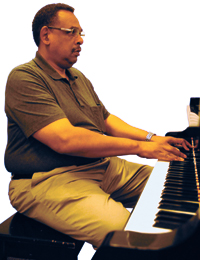
“It’s been kind of interesting, actually — having an impact on the Church Universal,” said Duncan, 60, choir director at Holy Name Parish in Birmingham and associate chairman of the Department of Music at Wayne State University.
When the revisions in the English translation of the Mass that went into effect the first Sunday of Advent last year were announced, new musical settings were needed to accommodate the changes, because the new wordings didn’t fit the old settings.
Some composers just reworked old settings, but the prospect of the changes gave a chance for other composers to compose new Mass settings. Duncan responded with his “Unity Mass,” which was published in May 2011 by Chicago sacred music publisher GIA Publications, Inc.
He called it the “Unity Mass” because “I wanted it to be something that could unite the most diverse assemblies,” Duncan explained.
“To me, it sounds like Detroit music — not Motown music, but Detroit music nevertheless,” he said.
The “Unity Mass” quickly received wide attention among parish music directors when it was used for a celebration of the Eucharist during the National Association of Pastoral Musicians’ annual convention in Louisville, Ky., that summer. The convention is the principal annual gathering of Church musicians from around the country.
“I wrote it for inclusion in second edition of ‘Lead Me, Guide Me,’ GIA’s hymnal designed for African-American congregations, but now they’ve included it in the new editions of all their hymnals. So, it’s also in ‘Gather III’ and the fourth edition of ‘Worship,’” Duncan said.
But perhaps even more popular has been his “Holy Name of Jesus Gloria,” which is also published in all of the GIA hymnals.
“I dedicated it to Msgr. John Zenz and the parish of Holy Name in Birmingham in honor of Sr. Shirlee Hoski, SSJ-TOSF, who died after a short illness,” Duncan said.
Duncan’s popular Mass settings are a part of the overall smooth transition most Catholics have made to the revised wordings of the Third Edition of the Roman Missal.
Dan McAfee, director of the archdiocesan Office of Worship, said the transition went “amazingly well” in the Archdiocese of Detroit.
Even infrequent Mass goers became accustomed to the changes over time, McAfee said, adding that he saw some apparent confusion at Christmas but not at the Easter Masses he attended.
Duncan has long been a key figure in sacred music in the metropolitan Detroit area. For 26 years he was music director at the Cathedral of the Most Blessed Sacrament in Detroit, and he also is a former associate director of the archdiocesan Office of Worship.
Although these days he is found at Holy Name, Birmingham, most Sundays, Duncan is a member of St. Fabian Parish, Farmington Hills.
He has a Bachelor of Arts from the University of Detroit, a Master of Music from Wayne State University and a Doctor of Musical Arts degree from the University of Michigan.
He is currently featured in a write-up on GIA’s web page, at www.giamusic.com.
The work Duncan is doing with the WSU Concert Chorale can be heard this fall when he conducts a non-liturgical performance of Mozart’s “Requiem Mass” at noon on Thursday, Nov. 15, at St. John’s Episcopal Church, Woodward at the Fisher Freeway, in downtown Detroit.