Michelle Samartino
Special to The Michigan Catholic
Metro area — A Vietnamese bowl of pho, a ponche at a Mexican dinner table, Polish golabki or karanji at an Indian celebration all share a common bond: It’s a way to celebrate their Catholic faith and heritage at Christmastime.
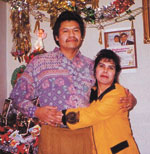
Posadas, a Latin American celebration during the nine days preceding Christmas, is an especially important tradition in the Leal household. Eufrocina Leal and her husband of 26 years, Hermenegildo, are members of Holy Redeemer Parish in southwest Detroit.
“Our culture plays a very important role in our Christmas holiday traditions,” says Eufrocina. There are nine families who receive Mary and Joseph in their homes, she says, “and we gather our families (mainly close relatives such as siblings and cousins) to pray the rosary and remember the plight of Mary and Joseph as they searched for shelter while awaiting the arrival of the baby Jesus.”
Most important during the celebration is the reason why they celebrate: the birth of the baby Jesus. After prayer, guests are served dinner or snacks, aginaldos (treat bags that consist of candy, peanuts, cookies and seasonal fruit), followed by the breaking of the piñata.
“In our family, we celebrate Christmas at midnight,” she says. “On the final day of the last posada, our family and friends gather and we pray the rosary into Christmas.”
It’s during the rosary that the Baby Jesus is greeted with lullabies and prayer.
Children are an important part of the tradition, as three girls are chosen to be the madrinas (godmothers) of the baby Jesus, dressed in white, who then hand out a bag of treats to everyone, she says.
Growing up in Mexico, Eufrocina says her parents “always made sure to let us know that first it was important to pray and then celebrate,” she recalls.
And a celebratory feast was always sure to follow — consisting of tamales, pozole and tostadas, she says. Hot drinks such as champurrado, made of toasted corn, chocolate, and brown sugar, and ponche, made of guayaba, sugarcane, cinnamon, raisin, pear, pineapple, and various fruits were also served.
“This is the traditional meal for us to eat every Christmas, and usually the only time we eat these dishes,” she says. “Some of the adults like to add a little tequila to their ponche for a little kick.”
Eufrocina stresses that although the posadas are an important and vital celebration in her culture, the most important aspect for her is the rosary. “Our family is very large and most of the time we are all cramped for space at our host’s home, but we all manage to make it work and together we pray.”
She credits her parents who instilled the importance of these traditions.
“I remember as a child in Mexico in my little town going from house to house asking for posada,” she says. “When I was smaller I thought about all the treats we would receive, but later on I came to understand the true meaning of why we prayed and the joy of receiving the baby Jesus at midnight.
“During that time of prayer we could reflect on all our blessings and that we should be thankful to spend that time with family.”
A big feast is not uncommon among the many cultures that celebrate Christmas, including those of other cultural backgrounds in the Archdiocese of Detroit.
Regina and Jerry Falkowski, members of St. Martin de Porres Parish in Warren, say Christmas Eve is a day of big celebration in their Polish family. “We have dinner and, typically, when we grew up, we would go to midnight Mass,” says Regina.
However, with 11 grandchildren, that tradition has changed into attending the children’s Mass on Christmas Eve instead.
“Every Christmas Eve, we set the table and have an extra empty chair for any guest that might come knocking, because no one can be turned away on Christmas,” she says.
Although that’s never happened, it’s part of an old tradition that dates back to people living in Poland, she explains.
“Some say it might be the Christ Child coming to visit as a stranger — but you never know who might drop in,” Regina says and laughs.
Polish foods including golabki (stuffed cabbage) and pierogi (potato dumplings) are served at the dinner table that night.
“Passing these traditions on are important to my husband and me,” she says. “We are both Polish and all we knew were Polish family traditions.”
Their grandchildren are a mix of Irish and Dutch and Polish, “and so they have some of their traditions too, but we try to keep to the basics with oplatek. We pass the unleavened bread on to the kids and grandkids and we share with each other and wish each other blessings and good health for a new year.”
Having a large and growing family helps them to embrace the diversity so evident with many families in the archdiocese.
“Our grandchildren have the best of both worlds and it’s really wonderful for them,” Regina says.
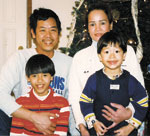
Twenty-one-year-old Khai Dinh and his family, members of St. Alfred Parish, Taylor, say many Vietnamese people celebrate the traditional aspects of Christmas, including decorations, gift giving, and attending Christmas Eve Mass.
“Christmas is almost as big as Tet in Vietnam,” Khai Dinh says, referring to the celebration of the Vietnamese New Year. “As for traditions, we would invite people over for Christmas and have a bowl of pho (beef noodle soup).
“I remember getting toys for Christmas,” he says. “My parents bought whatever they could afford.”
And the food was aplenty… “As with any Vietnamese family, there’s plenty of food,” he says and laughs, “because if you don’t, the guests would take it as an insult.”
It was always stressed in his family what the meaning of Christmas was, however. “They told me all about the importance of Christmas since I was too young to know the meaning of it.”
The meaning behind the season was always stressed to Liz Lopes as well, who grew up in India and moved to the United States when she was 18. She and her family are members of St. Valentine Parish in Redford Township.
It was in India where she learned to embrace people of all faiths.
“Growing up, Christmas was my most favorite holiday,” she recalls. “I used to invite all my Hindu friends to celebrate Christmas with me. My extended family used to come over and have dinner with us on Christmas day and we’d play with cousins.”
Even though Christians are a minority community in India, the holiday is celebrated not only by Christians but by those who were not Christians as well, says Lopes, who shared the history of her faith’s background.
“Christmas is the celebration of life, this day we commemorate the birth of Jesus Christ by spreading the message of love and forgiveness,” she says. “The Midnight Mass on Christmas Eve is a very important service and holds great religious significance. On this night, churches in India are decorated with flowers and candles.
After Mass, Lopes says, “everyone relishes a mouth watering feast of varies delicacies” including karanji, deep fried flour dumplings stuffed with a sweet mixture of coconut and sugar. Desserts are then distributed to the neighbors when they are wished Merry Christmas.
Also important in India is the Nativity, where plays are staged in many Christian churches. “The performances by young children depict the birth, life and actions of Jesus Christ and usually end with visit of a person dressed as Santa Claus in all shapes and sizes.” Santa’s attire would include large red dresses and snow white beards, she says, and called Christmas Baba, who gives out candies to the kids.
Attending Christmas Mass was extremely important, as she also recalls that her church would have games for the kids. “Participating in games and winning prizes was a most fulfilling day as well,” she says. After moving to the States, “we started these traditions with my children by serving in soup kitchens. Every Christmas we try to celebrate Christmas with homeless or elderly people, and I hope my children will continue this tradition.
“This is the spirit of Christmas in India by proclaiming Jesus is the reason for the season,” says Lopes.